In this article
 In this article
Get Growth Insights That Convert
Summarize this Article with AI
Open ChatGPT
Key Highlights
 Key Highlights
- Karl Fischer titration determines water content using a chemical reaction between iodine and water, available in two primary methods: coulometric and volumetric.
- Coulometric Karl Fischer generates iodine electrochemically and excels at detecting trace moisture below 100 ppm; volumetric Karl Fischer dispenses iodine-containing reagent via burette and handles higher moisture levels (0.1% and above).
- Coulometric offers superior sensitivity and no external reagent, while volumetric is simpler to operate and suited for routine testing of samples with measurable water content.
- Choose coulometric for pharmaceutical trace-level testing, electronics manufacturing, and materials with sub-ppm specifications; choose volumetric for food moisture analysis, petroleum products, and industrial quality control where moisture ranges from 0.1% to several percent.
Karl Fischer titration is the gold standard for water content analysis in laboratories across the food, pharmaceutical, petrochemical, and electronics industries. Two distinct methods accomplish this measurement: coulometric and volumetric. Choosing the correct approach depends on your sample's expected moisture level, the required detection limit, and your laboratory's existing instrumentation. This guide breaks down how each method works, compares their strengths and limitations, and walks you through a practical decision framework so you can select the right technique for your analysis.
What is Karl Fischer Titration?
Karl Fischer titration is a chemical method that quantifies water content in solid, liquid, and gas samples through a precise reaction between iodine and water. The method relies on the Bunsen reaction: iodine reacts with water in the presence of sulfur dioxide and a base (typically imidazole), consuming the iodine in direct proportion to the water present. By measuring either the amount of iodine consumed (volumetric) or the electrical charge required to generate iodine (coulometric), the instrument calculates the sample's moisture content with high accuracy.
Karl Fischer titration is the official reference method in multiple pharmacopeias and industry standards because it measures water specifically, shows minimal interference from other sample components, and works across an extremely wide moisture range—from parts per million in ultra-dry materials to several percent in aqueous systems. Laboratories use it to verify water content in pharmaceuticals, food ingredients, oils, polymers, and many other materials where moisture control is critical to product quality, stability, or compliance.
Coulometric Karl Fischer Titration Explained
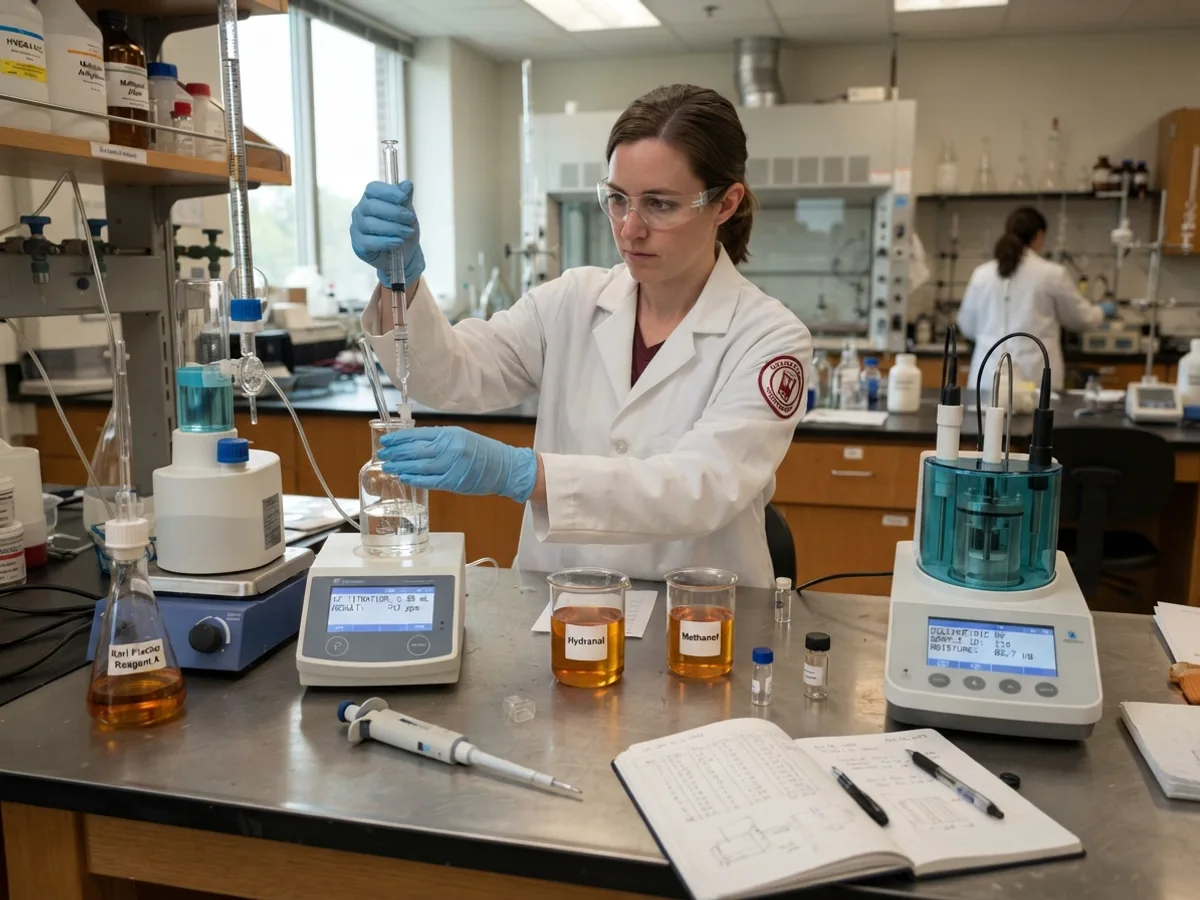
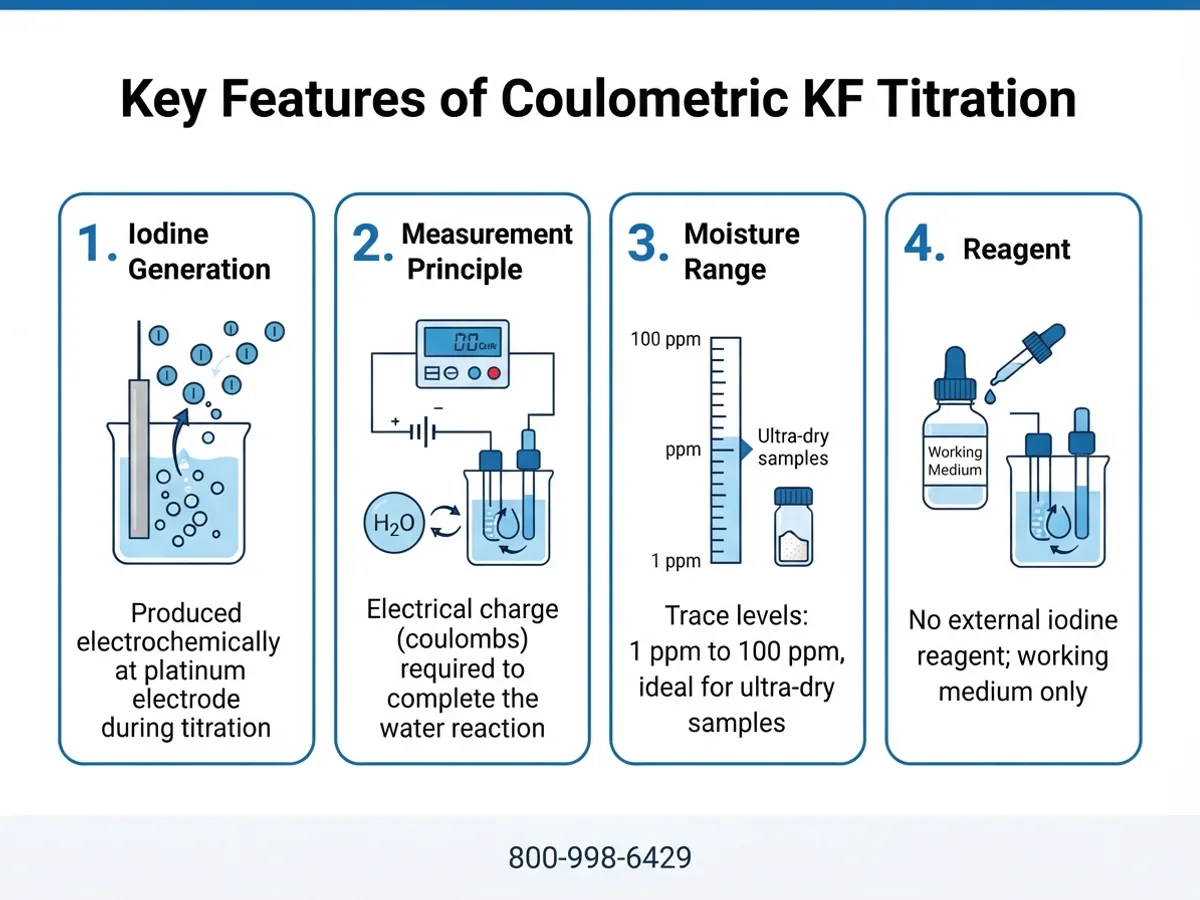
Coulometric Karl Fischer titration generates iodine electrochemically inside the titration vessel rather than adding it from a separate reagent bottle. A platinum electrode immersed in the working medium (containing sulfur dioxide, base, and solvent) produces iodine on-demand when electric current is applied. As water in the sample reacts with and consumes the generated iodine, the titrator measures the electrical charge (in coulombs) required to regenerate enough iodine to complete the reaction. Using Faraday's law, the instrument converts this charge into a precise water quantity (typically expressed in milligrams or parts per million).
Coulometric Karl Fischer is purpose-built for trace-level moisture analysis, with detection limits as low as 1 ppm and an effective working range from about 1 ppm to 100 ppm. Because iodine is generated in place and not premade, there is no external Karl Fischer reagent to handle, prepare, or worry about degradation during storage. This feature makes coulometric titrators ideal for pharmaceutical, electronics, and specialty chemical laboratories where ultra-dry materials and strict water specifications demand the highest sensitivity.
Volumetric Karl Fischer Titration Explained
Volumetric Karl Fischer titration follows the classical titration workflow: a calibrated burette (usually motorized in modern instruments) dispenses a standardized Karl Fischer reagent into the titration vessel containing the sample. The Karl Fischer reagent is a prepared solution of iodine, sulfur dioxide, base, and solvent—either a single-component formulation or a two-component system where iodine is added just before use to maximize stability. As the reagent is added, it reacts with the water in the sample, consuming the iodine present in the reagent. The endpoint is detected electrometrically when iodine concentration rises above a threshold, signaling all sample water has been consumed. The volume of reagent dispensed is directly proportional to the water content in the sample.
Volumetric Karl Fischer handles a much wider moisture range—typically from 0.1% to 100% water by weight—making it the standard choice for routine quality control in food, beverage, oil, cosmetic, and chemical manufacturing. The method is straightforward to operate, requires no specialized electrodes, and instruments are generally less expensive than coulometric models. Two-component reagent systems offer better long-term stability in high-humidity environments since iodine is not exposed to air until immediately before use.

Coulometric vs Volumetric: Head-to-Head Comparison
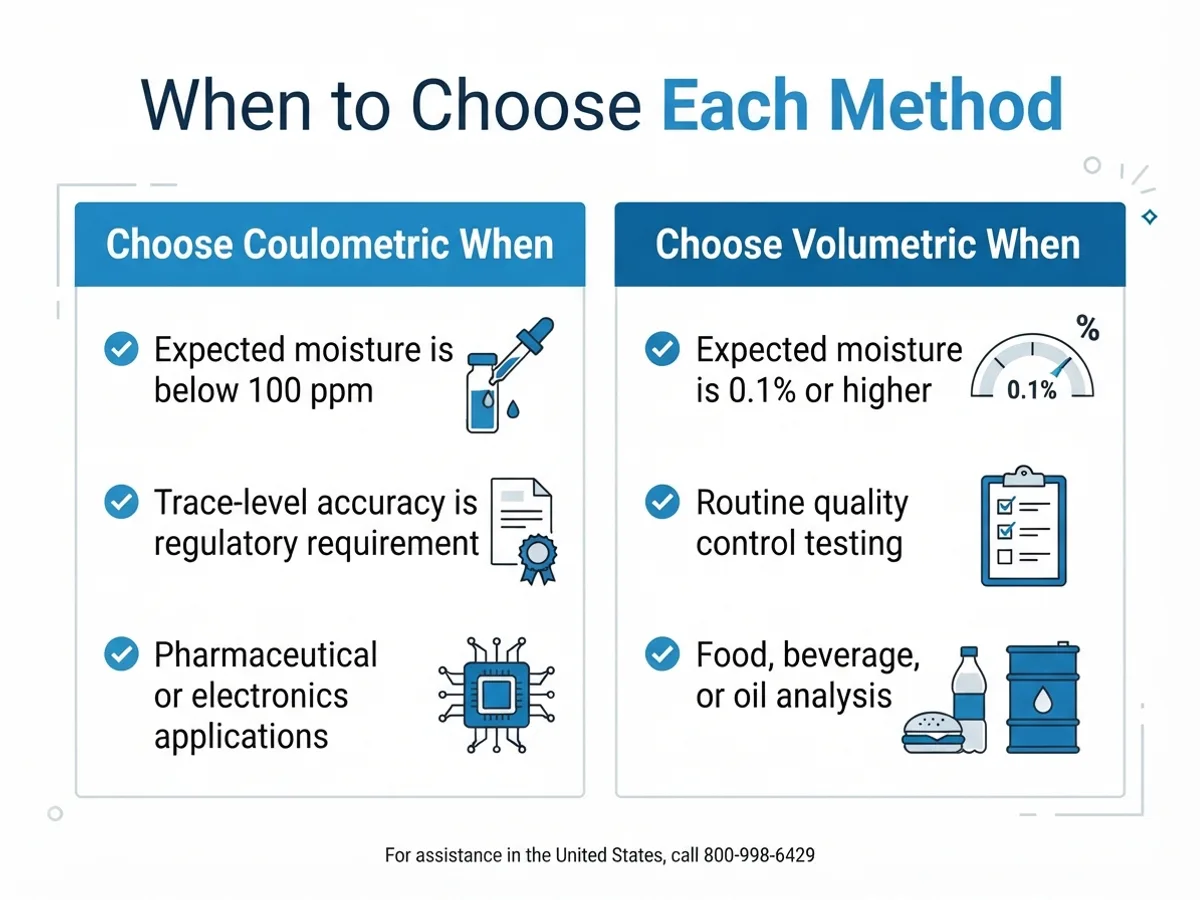
Coulometric Karl Fischer excels when your samples contain moisture below 100 ppm or when regulatory specifications demand sub-ppm precision—common in pharmaceutical tablet cores, electronic components, and volatile organic solvents. It requires no external reagent preparation and delivers the lowest possible detection limits.
Volumetric Karl Fischer is the workhorse of analytical chemistry when moisture ranges from 0.1% upward. It is intuitive to operate, tolerates larger sample sizes, and accommodates the moisture levels found in most industrial and food products. Because reagent cost is lower and the instruments are simpler mechanically, many facilities maintain volumetric instruments as their primary moisture analyzer.
Coulometric vs Volumetric Karl Fischer Titration
| Criterion | Coulometric | Volumetric |
|---|---|---|
| Detection Limit | 1 ppm or lower | 0.01% (100 ppm typical) |
| Working Range | 1 ppm to 100 ppm | 0.1% to 100% |
| External Reagent | None; iodine generated in situ | KF reagent required; must be standardized |
| Sample Size | Milligrams to grams | Grams to hundreds of grams |
| Speed | Seconds to minutes (trace analysis) | Minutes (depends on moisture level) |
| Instrument Complexity | High (electrochemical cell, current control) | Medium (burette, endpoint detection) |
| Cost | Higher initial and maintenance | Lower initial, modest reagent cost |
| Best Suited For | Pharmaceuticals, electronics, specialty chemicals | Food, beverage, oils, routine QC |
Advantages of Karl Fischer Titration
Both coulometric and volumetric Karl Fischer methods offer significant advantages over alternative moisture measurement techniques like loss-on-drying, Karl Fischer oven, or moisture meters.
Water specificity is Karl Fischer titration's defining strength. The reaction is selective for water only; other solvents, oils, and salts do not interfere. This specificity is why Karl Fischer is the official method in USP (United States Pharmacopeia), EP (European Pharmacopeia), and ICH guidelines for pharmaceutical applications.
Speed is another major advantage. A single Karl Fischer analysis completes in minutes, compared to hours for oven drying methods. In high-throughput environments—food manufacturing, chemical batch release, or pharmaceutical QC—this speed difference translates directly to faster product release and lower analysis cost per sample.
Versatility across sample types is unmatched. Karl Fischer works on solids (powders, tablets, resins), liquids (oils, solvents, solutions), and gases (through specialized headspace cells). No other single analytical method spans this range effectively.
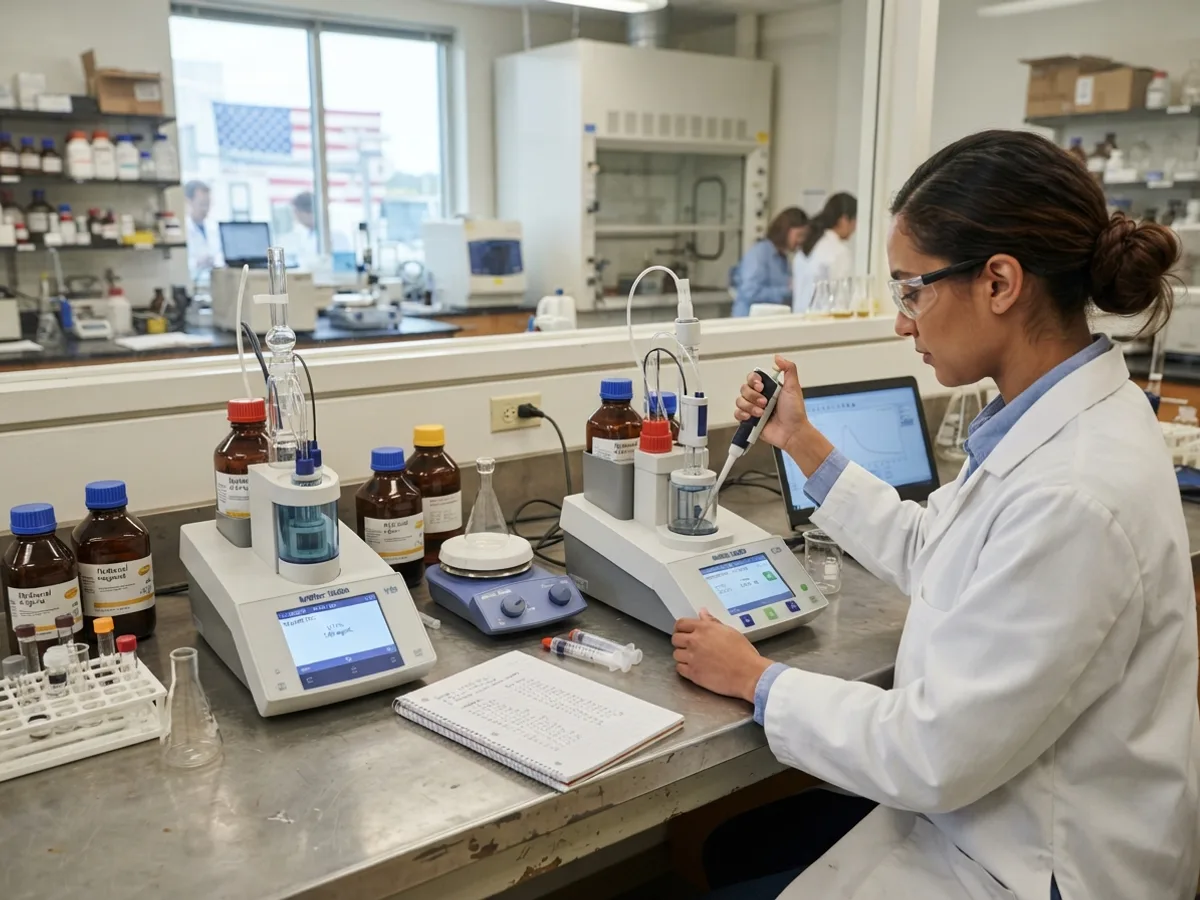
Coulometric Karl Fischer adds the advantage of no external reagent handling; the method generates iodine on demand and never requires reagent standardization or storage management. Volumetric Karl Fischer benefits from a large installed base, abundant technical support, and reagent availability from multiple suppliers worldwide.
Limitations of Karl Fischer Titration
Despite its widespread use and strong performance, Karl Fischer titration has operational and sample-related limitations that analysts must understand.
Reagent and solvent handling is the most immediate limitation, particularly for volumetric systems. Karl Fischer reagent contains methanol as a solvent, which is volatile and hygroscopic. Once a reagent bottle is opened, methanol begins to evaporate and the reagent absorbs water from humid air, causing titer (standardization value) to drift. This instability demands frequent restandardization—sometimes daily in humid climates—and meticulous bottle closure between runs. Coulometric systems avoid this burden, but their working medium still requires proper storage away from heat and moisture.
Sample matrix interference can occur when samples contain substances that react with iodine: strong reducing agents (sulfites, phenols, ascorbic acid), strong oxidizing agents (peroxides, chlorine compounds), or acidic/basic species that consume the buffering base in the titration medium. Analysts must either pre-treat samples, use masking reagents, or interpret results cautiously when interferences are suspected.
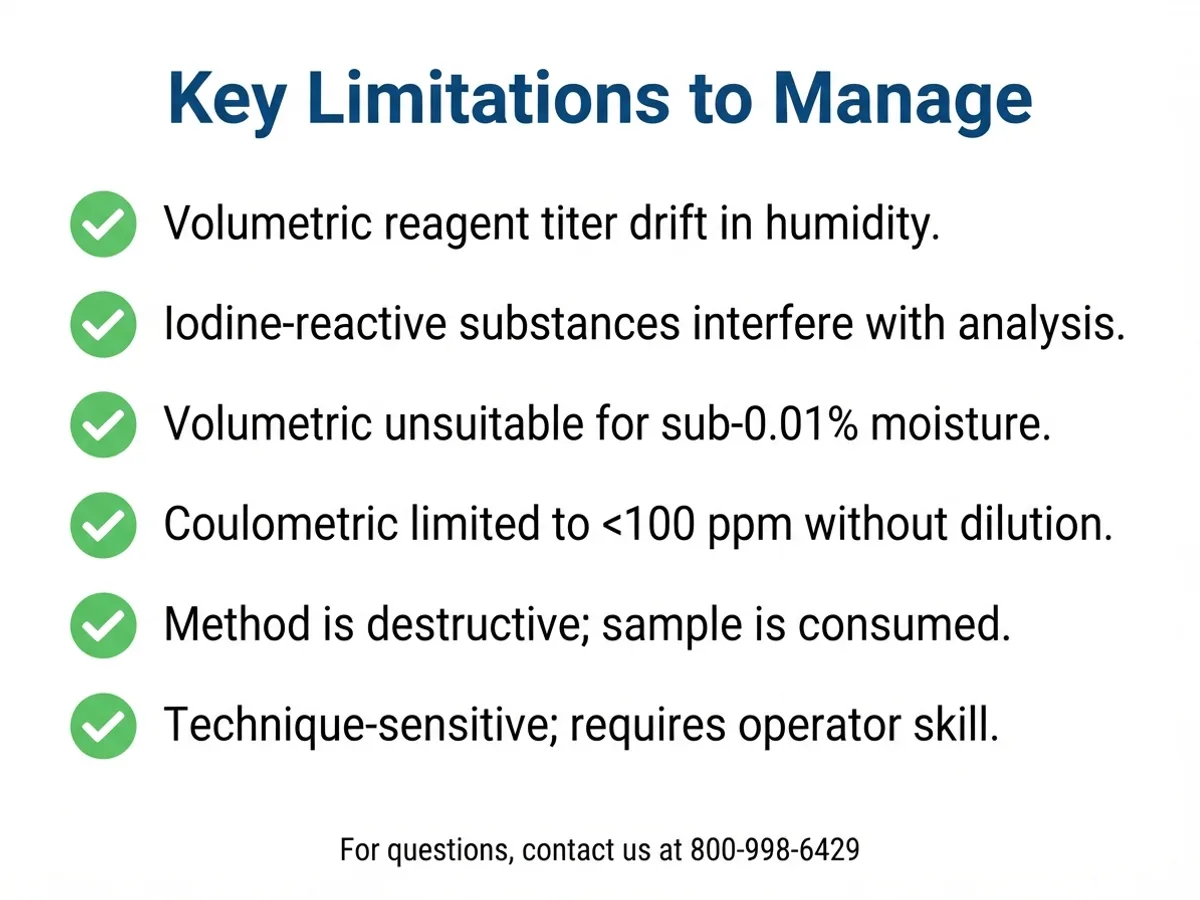
Moisture detection limits present the inverse problem: volumetric Karl Fischer cannot reliably measure moisture below about 0.01% (100 ppm) because the volume of reagent consumed becomes too small to dispense accurately. For samples expected to be ultra-dry, coulometric analysis is mandatory.
Coulometric Karl Fischer has its own limitation at the high end: samples with moisture above 100 ppm begin to exceed the practical current range, and very high moisture samples (approaching 1%) may require dilution or splitting into multiple aliquots, adding time and cost.
Finally, the method is destructive—the sample is consumed during analysis—and it requires careful technique. Moisture in air and water vapor from the analyst's breath can contaminate results if the titration vessel is not properly sealed and purged with dry gas.
How to Choose Between Coulometric and Volumetric KF Titration
Selecting the right Karl Fischer method depends on five practical criteria. Work through them in order to match your analytical need to the best instrument.
Step 1: Determine the Expected Moisture Range. Review your sample specifications, regulatory documents, or historical data. Is moisture expected to be below 100 ppm (trace level), or 0.1% and above (routine level)? If below 100 ppm, coulometric is your method. If 0.1% or higher, volumetric is appropriate and usually sufficient.
Step 2: Identify Your Regulatory Requirements. If your laboratory operates under FDA, USP, EP, or ICH guidelines (common in pharmaceuticals), Karl Fischer method type may be specified in your compendial monograph or test procedure. Some standards explicitly require coulometric for trace moisture; others accept either method. Review the applicable standard first.
Step 3: Assess Sample Properties and Size. Trace-level samples (electronics, freeze-dried pharmaceuticals, specialty solvents) often come in small quantities measured in milligrams, which suits coulometric's small-sample protocol. Larger samples (food, oils, chemicals) in gram quantities often contain higher moisture and suit volumetric's larger-volume burettes and broader range.
Step 4: Consider Operator and Maintenance Burden. If your laboratory runs high-humidity environments (kitchens, coastal facilities), volumetric reagent titer management becomes tedious. Coulometric's no-external-reagent model simplifies this. Conversely, if your team has extensive experience with volumetric burette operation and standardization, the transition to coulometric may not justify the equipment cost.
Step 5: Evaluate Total Cost of Ownership. Coulometric instruments have higher upfront capital cost and more complex electrodes requiring periodic maintenance. Volumetric instruments are less expensive but incur ongoing Karl Fischer reagent costs. Calculate five-year cost over your expected sample volume; the breakeven point often occurs around 10,000 to 15,000 samples annually.
- Does your sample contain less than 100 ppm moisture? If yes, coulometric is necessary. If no, go to step 2.
- Does your regulatory method specification name Karl Fischer coulometric or volumetric? If a specific method is mandated, use it. If either method is acceptable, go to step 3.
- Is your sample size less than 1 gram or is it a precious or highly toxic material? If yes, coulometric's efficiency with small aliquots is advantageous. If no, go to step 4.
- Does your facility have high humidity, frequent instrument downtime, or staff unfamiliar with reagent standardization? If yes, coulometric's simplicity reduces maintenance burden. If no, go to step 5.
- Calculate your sample throughput and five-year cost for each method. Coulometric typically makes financial sense for labs processing 10,000+ samples annually; volumetric is more economical for lower-volume or routine testing.
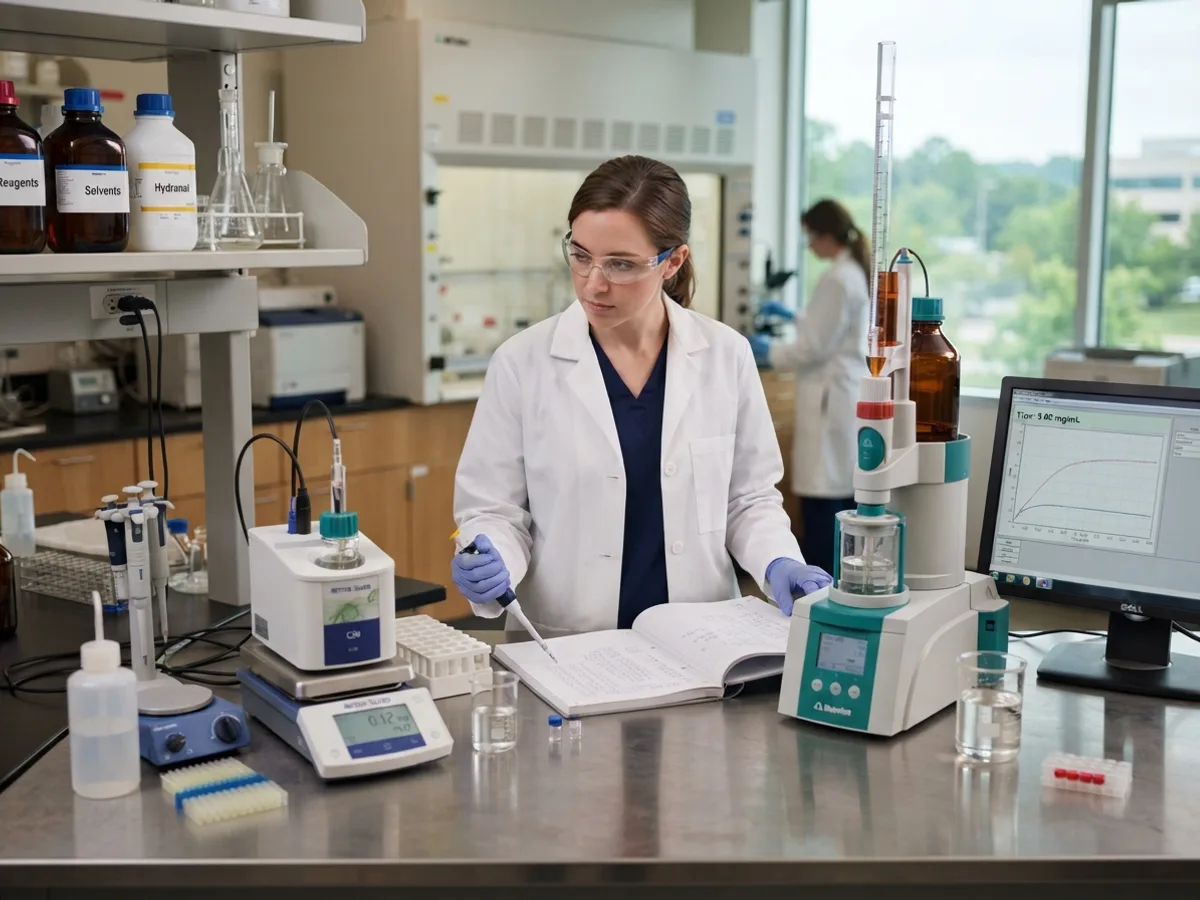
Karl Fischer titration remains the industry standard for water content determination because of its specificity, speed, and regulatory acceptance. The choice between coulometric and volumetric methods is not about which is "better"—it is about matching the method to your analytical need. If your samples contain trace moisture below 100 ppm, coulometric Karl Fischer's superior sensitivity and reagent-free simplicity make it the clear choice. For routine testing of samples with moisture from 0.1% upward, volumetric Karl Fischer offers the practical and economical advantage. Work through the five-step decision framework in this guide: evaluate your expected moisture range, check your regulatory requirements, assess sample properties, consider operator burden, and calculate total cost of ownership. Scientificgear provides in-house repair, calibration, and on-site training for both coulometric and volumetric Karl Fischer titrators, helping your laboratory maintain measurement accuracy and regulatory compliance. Contact us for instrument consultation, demonstration, or to schedule an on-site setup.
Frequently Asked Questions
What is the main difference between coulometric and volumetric Karl Fischer titration?
Coulometric Karl Fischer generates iodine electrochemically during the analysis and measures the electrical charge consumed, excelling at trace moisture below 100 ppm. Volumetric Karl Fischer dispenses iodine-containing reagent from a burette and measures the volume consumed, best suited for routine moisture from 0.1% and above. The choice hinges on your expected moisture level and required sensitivity.
Which method is more accurate for trace moisture in pharmaceuticals?
Coulometric Karl Fischer is the preferred method for trace moisture in pharmaceutical applications. Its detection limit (1 ppm or lower) and lack of external reagent make it ideal for meeting strict water specifications in tablets, capsules, and freeze-dried powders. Volumetric Karl Fischer cannot reliably measure below approximately 100 ppm and is reserved for higher-moisture pharmaceutical products.
Can Karl Fischer titration be used for all sample types?
Karl Fischer works well on solids, liquids, and gases, but not all samples are suitable. Samples containing iodine-reactive substances—strong reducing agents, oxidizing agents, or extreme pH compounds—can interfere with the reaction. Additionally, the method is destructive and requires dry sample handling. Consult your instrument supplier if your sample type is unusual or if you suspect interference.
What reagents are used in coulometric versus volumetric Karl Fischer titration?
Coulometric Karl Fischer uses a working medium containing sulfur dioxide, base (imidazole), and solvent, but no external iodine reagent. Iodine is generated electrochemically on demand. Volumetric Karl Fischer uses a prepared Karl Fischer reagent containing iodine, sulfur dioxide, base, and solvent, dispensed from a burette. Volumetric reagents come in one-component and two-component formulations.
Is coulometric Karl Fischer titration better for pharmaceutical applications than volumetric?
For trace-moisture testing required in many pharmaceutical specifications, yes—coulometric is superior because of its lower detection limit and reagent-free operation. However, not all pharmaceutical applications require trace analysis. Products like liquid medications or creams often have 0.5% to 2% water by design, making volumetric Karl Fischer the practical choice. Always follow your compendial monograph or customer specification.
How often must volumetric Karl Fischer reagent be standardized?
Volumetric Karl Fischer reagent titer (strength) can drift daily, especially in humid environments, because methanol evaporates and the reagent absorbs water from air. Best practice is to standardize before each analytical session using a calibration standard (typically potassium dichromate or a certified aqueous standard). Some laboratories working in dry conditions may standardize weekly, but daily standardization is safer.
What is the cost difference between coulometric and volumetric Karl Fischer instruments?
Coulometric instruments typically cost 20% to 40% more upfront because they include an electrochemical cell and precision current control. However, they eliminate the need for external iodine reagent and reagent standardization, reducing long-term operational cost. Volumetric instruments are less expensive initially but incur monthly or quarterly reagent costs. High-volume laboratories (10,000+ samples/year) often break even or favor coulometric on a five-year basis.
Amazing scientific equipment! I loved my Automatic Titrator! Would buy again.
Amazing scientific equipment! I loved my Automatic Titrator! Would buy again.